Kelzynorva
Quantum Framework
Quantum Framework
Couldn't load pickup availability
1. Problem Statement
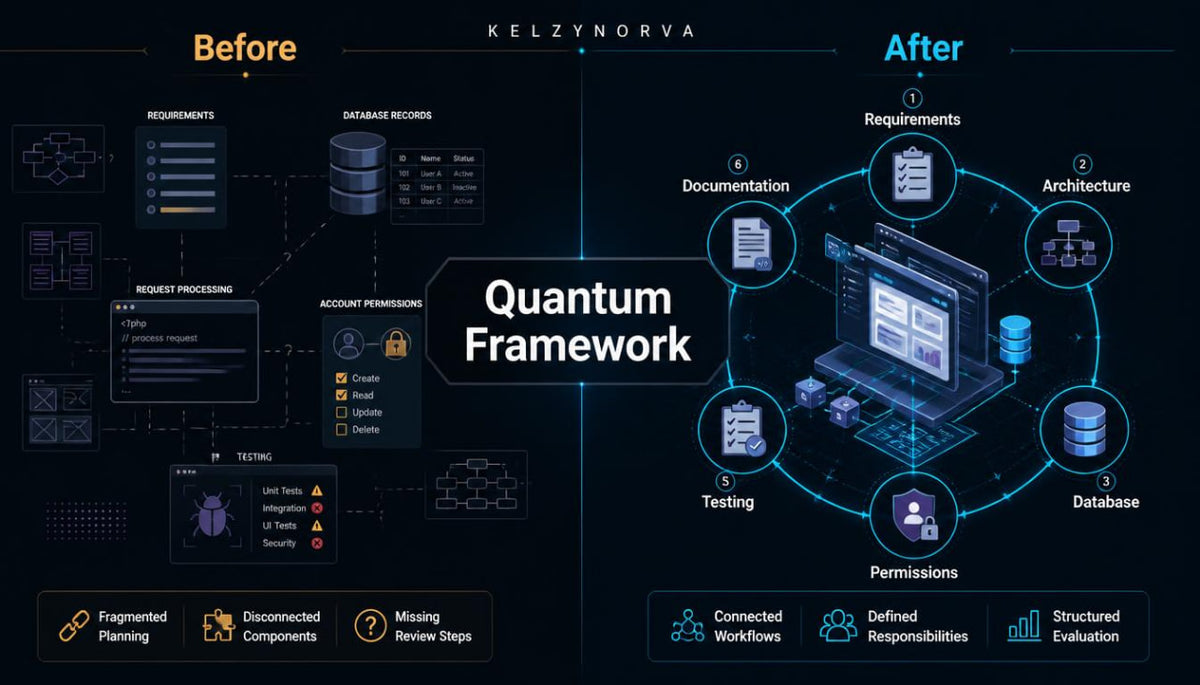
A collection of working features does not automatically form a coherent application. Unclear requirements can lead to inconsistent records and repeated code. Data handling, permissions, and error responses may behave differently between related modules. Changes become difficult to evaluate when tests and architectural notes are missing. Learners need a connected case study that demonstrates how design decisions can be examined throughout an application's development.
2. Solution
Quantum Framework follows a single PHP application scenario through planning, implementation, and evaluation. Each module introduces a practical concern and relates it to components developed earlier. Guided examples connect data structures, application services, session behavior, and database operations. Review activities examine trade-offs, unexpected inputs, and changes to requirements. The final studio asks learners to assemble an application dossier and review their decisions.
3. What's Inside
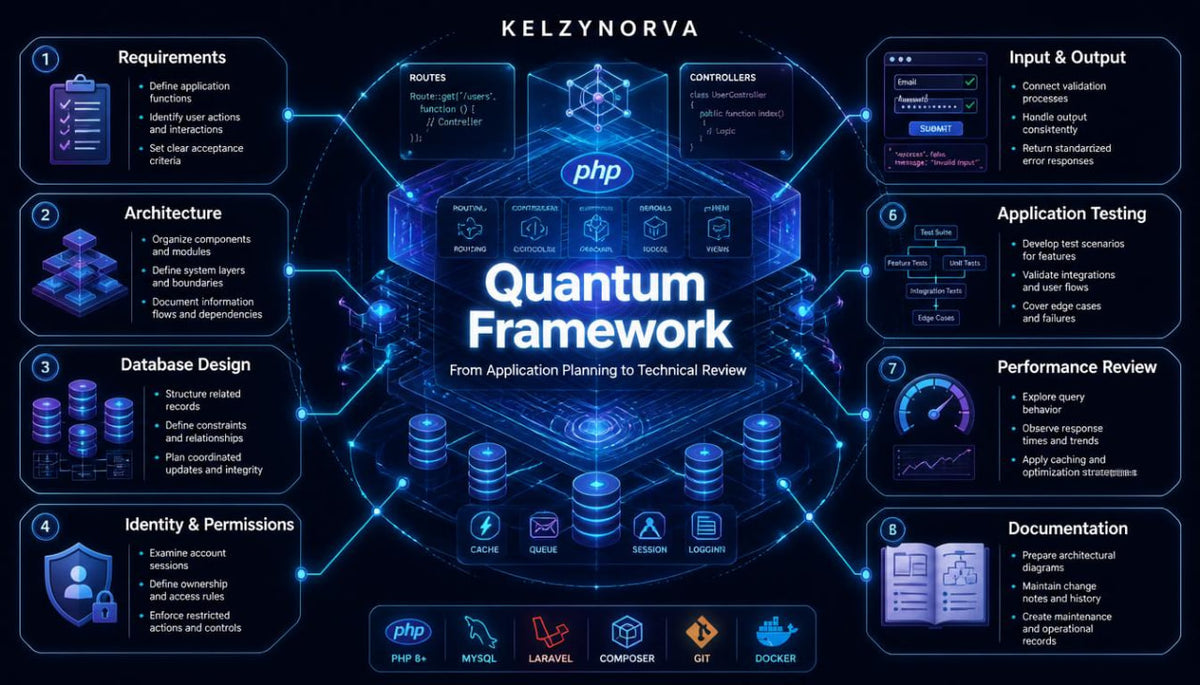
Module 1 — Requirements and Scope
Translate a fictional organization's needs into user actions, data rules, boundaries, and acceptance criteria before beginning implementation.
Module 2 — Architecture and Responsibilities
Map request handlers, service classes, data operations, and presentation components; explain how information moves between them.
Module 3 — Data Model and Persistence
Design related tables, apply constraints, plan migrations, and coordinate changes through transactions and parameterized queries.
Module 4 — Identity and Permissions
Examine login sessions, password verification, record ownership, role checks, and responses to unauthorized requests.
Module 5 — Input and Output Boundaries
Combine validation, output escaping, form request checks, and carefully written error messages within shared workflows.
Module 6 — Testing Connected Features
Draft unit and integration test cases covering normal behavior, invalid values, conflicting updates, and missing records.
Module 7 — Performance Investigation
Review timing observations, repeated queries, and alternative caching approaches.
Module 8 — Maintenance and Handoff
Prepare structural diagrams, change notes, issue logs, and a review checklist explaining how the application is organized.
Applied Studio — Community Resource Registry
Work through a multi-page registry scenario with categorized entries, account permissions, searching, editing, and a documented review of its design.
4. Who Is This For?
Quantum Framework is intended for learners who already understand PHP classes, database operations, application structure, and introductory testing. It suits readers interested in connecting technical decisions across a larger case study. The course emphasizes analysis, practical documentation, and reasoned revision rather than a particular career outcome.
5. What You'll Learn
-
Turn application requirements into defined tasks and acceptance criteria.
-
Diagram component responsibilities and information flows.
-
Organize database relationships and coordinated updates.
-
Review identity, session, and record permission rules.
-
Design tests for connected application behavior.
-
Interpret introductory performance observations.
-
Write maintenance notes and evaluate architectural trade-offs.
6. Guarantee
We offer a 30-day money-back guarantee on all paid digital courses and educational materials available through our store.
If you are not satisfied with your purchase, you may request a full refund within 30 calendar days of the original purchase date.
As our courses are delivered digitally, there is no need to return any physical items. Receiving, downloading, or opening the course materials does not affect your eligibility for a refund under this policy.
Self-paced learning overview
- 📥 Digital file available after purchase
- ♾️ Long-term availability
- 🔒 Secure checkout
- 🗓️ Content updated in 2026
How are Kelzynorva courses organized?
How are Kelzynorva courses organized?
Our PHP Development courses follow a structured learning approach, with each course covering a particular selection of concepts, techniques, and practical exercises. The collection progresses from introductory topics toward more detailed programming subjects, allowing learners to choose materials that align with their current knowledge and interests.
What format do the courses come in?
What format do the courses come in?
Our courses are provided as digital educational materials containing written explanations, organized modules, code examples, and practical learning activities. Each course follows a clear structure so learners can review individual subjects and revisit examples whenever needed.
Do I need previous programming knowledge to begin?
Do I need previous programming knowledge to begin?
The required knowledge depends on the course you select. Introductory materials are intended for beginners, while later courses explore subjects that benefit from familiarity with PHP fundamentals. We recommend reviewing each course description to understand its topics and intended audience.
Share